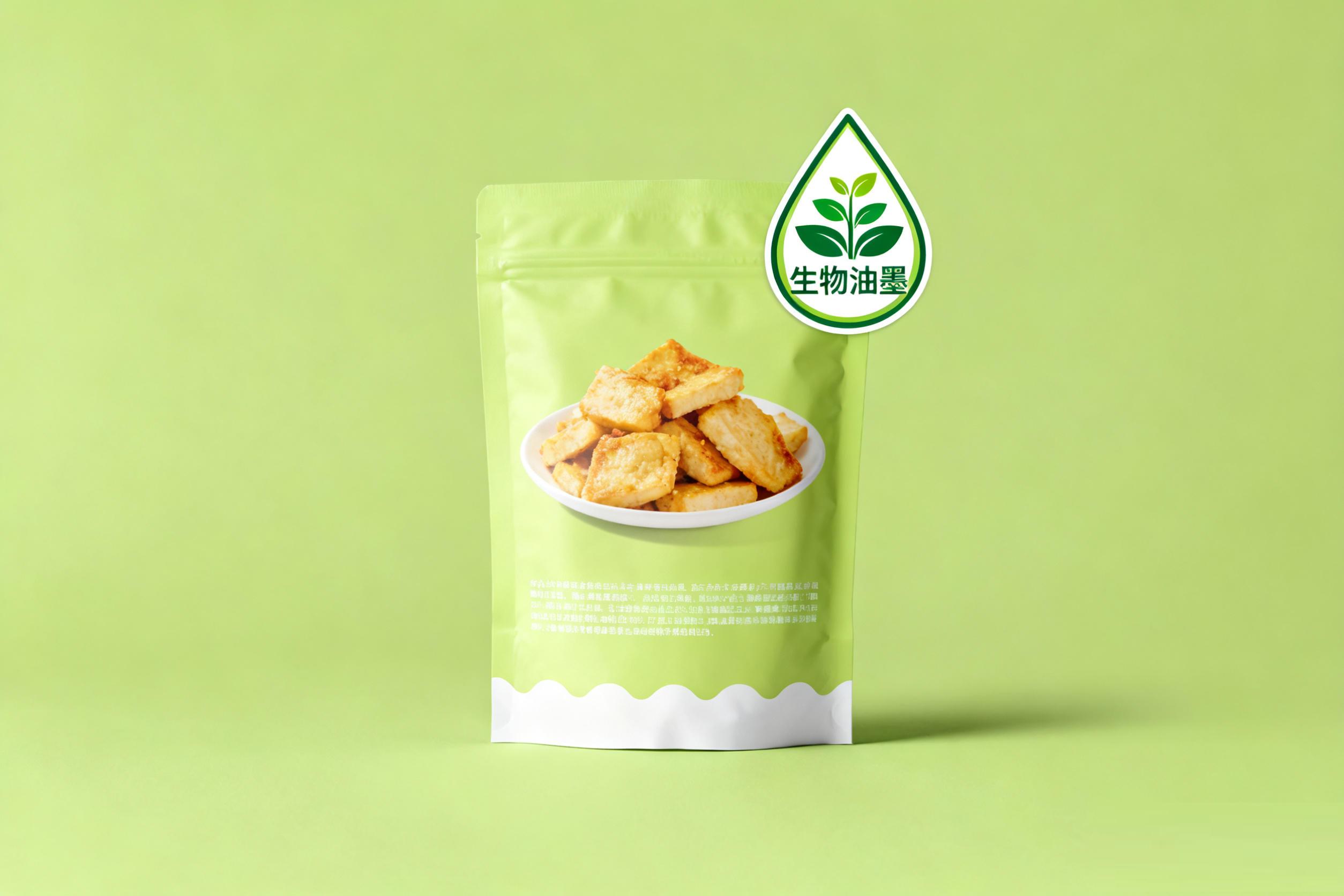
The LPBIO bio-ink series has obtained the bio-trademark mark and received the BIOMASS certification from the Japan Organic Resources Association, meeting the standard of biomass grade above 10%, which can effectively reduce carbon emissions.
Detailed
The LPBIO bio-ink series has obtained the bio-trademark mark and received the BIOMASS certification from the Japan Organic Resources Association, meeting the standard of "biomass grade above 10%", which can effectively reduce carbon emissions.
Product uses and features
1.It has a compound performance that can handle applications ranging from non-boiling to boiling and high-temperature steaming.
2.It has the same printing performance and brushing effect as general general-purpose inner printing composite inks.
3.Used as a composite packaging material, it is almost suitable for any film.
4.The residual solvent in printed materials is very little, and packaging materials that meet environmental protection requirements can be printed.
5.There is no unpleasant smell of toluene or methyl ethyl ketone, which can ensure the hygiene of the working environment.
Reference color
Base colors such as R631 white, F121 red, F23 yellow, R39 blue, R92 Black, 3 red, R235 yellow, R262 Yellow, F523 orange, F572 Peony, Z821 purple, R79 green, and R-toned ink are available. Special color samples can be prepared according to customer requirements.
Diluent and printing viscosity
|
Solvent for white ink: |
2-N-BUTOXYETHYL METHACRYLATE/ Isopropyl alcohol=90/10 |
|
Solvent for applying colored ink剂: |
N-propyl ester/Propanol/1-Methoxy-2-propanol=85/10/5 |
|
Extremely slow-drying solvent: |
Butyl ester/1-Butanol/1-Methoxy-2-propanol=75/10/15 |
white ink: 12~15 s, color ink: 13~16 s ※ 3#Charn CupThe ratio of printing viscosity and thinner can be adjusted accordingly according to the printing pattern, drying capacity, printing speed and printing effect.
Instructions for the Use of Curing agent
LPBIO series inkIt can be used for two-component purposes to enhance the performance of the ink. Curing agent addition: TCS-4394 addition amount: 1-3%
Performance improvement: Increase composite strength, temperature resistance, adhesion, etc
Disposal of old ink: Leftover ink with added curing agent should not be stored for a long time. When using it again, mix it with new ink (old ink <30%) and add the curing agent again. Pay attention to reverse adhesion.
Notes
1.Standard colors such as S3 red, S16 red and gold and silver can only be used for general packaging purposes and cannot be used for any boiling (including pasteurization), steaming or boiling purposes.
2When printing on hygroscopic films such as S3 red and S16 red nylon, there is a risk of discoloration or migration due to the influence of water. According to the post-processing and storage conditions of the product, especially for products with water on the surface, please avoid using them.
3.When mixing light colors, there is a risk of discoloration during heat sealing. It is not recommended for steaming or boiling purposes.
4.When used for PT cellophane and nylon, 3% curing agent is required.
5. There are restrictive regulations on the use of the base color ink according to the purpose. The marks indicating the applicable scope are marked before the color match number. "S" indicates the non-boiling grade, and "F" indicates the boiling grade.
Environmental protection regulations
1Complies with the requirements of regulations such as GB4806.14, GB4806.1, and GB31603;
2.Comply with the requirements of regulations such as ROHs, REACH, and EN71-3;
3.Comply with the standard QB/T2024 "Gravure Plastic Film Composite Ink". 4. This product complies with the NL rules formulated by the Japan Printing Ink Association.
Product application cases
|
Packaging classification |
Specific examples |
|
Food packaging |
Jelly covers, milk tea bags, chestnut bags, etc |
|
Packaging for daily chemical products |
Facial mask bags, laundry detergent bags, etc |
|
Pharmaceutical packaging |
Capsule cover film, tablet cover film, etc |